
Last Updated: August 24, 2026, 9 am UTC
As clinical development grows more complex, sponsors have an opportunity to rethink not only who they outsource to but also how the work is structured. Clinical trials now span more countries, include more procedures and endpoints, depend on specialized technologies, and involve coordination across sponsors, vendors, and functional partners.
Despite this growing complexity, outsourcing decisions often begin with familiar delivery models, legacy processes, or standard request for proposal (RFP) templates. These approaches can improve consistency and simplify procurement, but they may also define the solution before the project’s specific requirements have been fully considered.
The goal is not to replace traditional outsourcing models. It is to use them more intentionally. By first defining what success looks like for a study or project, sponsors can create a delivery strategy that reflects its scientific, operational, and organizational needs.
Start with Priorities, Not Delivery Models
From single studies to entire portfolios, selecting the right outsourcing model requires balancing a range of operational priorities. As clinical development has become more complex, studies increasingly require specialized expertise, broader geographic reach, and varying levels of sponsor oversight. At the same time, many sponsors are operating with leaner internal teams while retaining responsibility for strategic oversight, quality, and patient safety.
As development pipelines become more specialized, sponsors increasingly rely on networks of CROs, functional providers, technology companies, and niche experts rather than maintaining every capability internally.
This evolution makes thoughtful operating model design more important than ever. Established vendor relationships, standard templates, and proven processes can provide a useful starting point, but they should not automatically determine how every program is delivered. The right structure depends on the priorities of the study or project and the external capabilities needed to complement the sponsor’s internal team.
Designing Around Priorities Instead of Preferences
Rather than beginning with a delivery model, sponsors can identify the priorities that will have the greatest impact on study success. For some studies, accelerating startup timelines may be the primary objective. Others may prioritize sponsor oversight, cost predictability, access to specialized expertise, geographic flexibility, or additional internal capacity. These priorities should shape how responsibilities are shared between the sponsor and CROs, not the other way around.
One way to think about this is as a series of operational “sliders.” Increasing one priority often affects another. Rather than viewing outsourcing as a choice between fixed delivery models, sponsors can balance these considerations to create the right structure for each study:
- Speed to startup and execution
- Cost and budget predictability
- Sponsor oversight and decision-making
- Internal capacity and resourcing
- Geographic complexity
- Scope of outsourced services
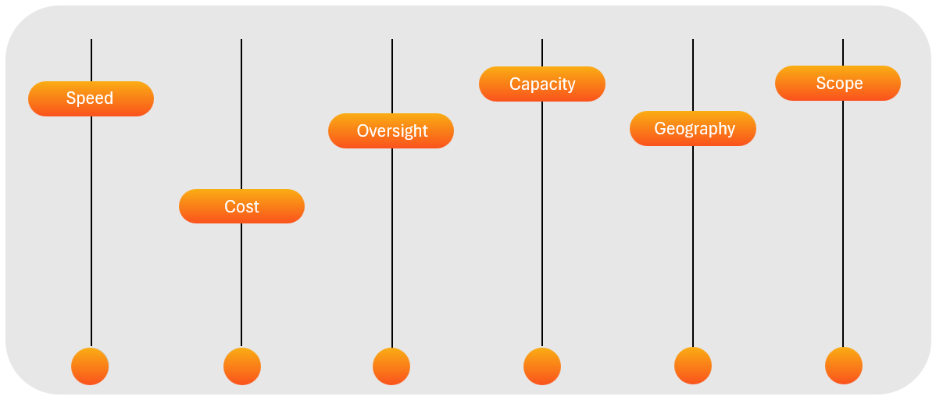
Figure 1. Operational priorities can be adjusted to create an outsourcing approach aligned with each study’s specific needs.
Not every program is optimizing for the same outcome. An individual study may prioritize speed and flexibility, while a broader development portfolio may place greater emphasis on consistency, scalability, or long-term efficiency. The goal is not simply to determine whether a study should be characterized as “full-service” or “FSP.” It is to understand which combination of capabilities, governance, expertise, and delivery will best support the program’s objectives.
The RFP Is Where Model Design Begins
Once priorities have been defined, the next step is translating them into a delivery approach. Sponsors often view the RFP primarily as the point at which they begin evaluating CROs. In practice, it is also one of the first opportunities to define the operating model. RFP templates serve an important purpose. They make proposals easier to compare, support consistent evaluation, and can accelerate procurement. However, they should not unintentionally limit alternative solutions that may be better suited to the program.
Sponsors can strengthen the process by using the RFP as an internal alignment tool before engaging potential partners. Early discussions should establish the program’s operational priorities, governance expectations, decision-making responsibilities, and resourcing needs.
Key questions may include:
- What are we optimizing for?
- Which decisions should remain sponsor-led?
- Where will external expertise create the greatest value?
- Does the internal team have the capacity to provide the desired level of oversight?
- How much flexibility may be needed as the study progresses?
Answering these questions helps create an RFP that communicates both the services required and how the sponsor expects the partnership to function.
Successful Models Are Built on Operational Clarity
Intentional planning does not end once responsibilities have been assigned. Regardless of how work is divided, successful outsourcing relationships depend on operational clarity. Clear decision ownership, defined accountability across organizations, transparent governance structures, and integrated communication help prevent responsibilities from becoming fragmented as more stakeholders are involved.
Alignment should also include agreement on how performance will be evaluated once the study is underway. Traditional metrics such as timelines, budget adherence, and data quality remain important, but they may not fully reflect whether the partnership is working effectively. Sponsors and CROs can also define measures related to decision-making speed, issue resolution, communication, resource responsiveness, and the ability to adapt to changing study needs.
Establishing these expectations early creates a stronger basis for ongoing governance discussions. It also allows teams to recognize when adjustments are needed before operational challenges begin to affect study performance.
Operational clarity also means eliminating unnecessary duplication. In some outsourcing arrangements, sponsors and CROs unintentionally perform overlapping oversight activities, adding cost and complexity without improving quality. A well-designed model gives every role a clear purpose, ensures governance adds value, and centers accountability on shared outcomes rather than individual tasks.
The partnership should also be able to adapt as the study progresses. Changes in geography, enrollment, timelines, or resource needs should be anticipated within the broader strategy rather than requiring the operating model to be redesigned. The strongest models are tailored to the specific needs of the study while maintaining the flexibility to evolve, supporting collaboration, adaptability, and shared accountability throughout the study lifecycle.
Looking Beyond Traditional Categories
As clinical development advances, how capabilities are combined matters more than the boundaries between full-service, FSP, technology, consulting, and specialized models.
Sponsors can treat these models as building blocks, combining full-service support, embedded teams, modular services, and specialized vendors based on program needs. In this way, a hybrid model becomes the result of thoughtful design rather than the starting point.
By defining priorities first, sponsors can select the right mix of governance, technology, resources, and expertise. The goal is purposeful customization: an operating model designed around the needs of the study while remaining practical, adaptable, and equipped to evolve as those needs change.
Connect with our clinical operations experts to discuss how a purpose-built operating approach can align your outsourcing strategy with your program’s priorities, governance needs, and long-term development goals.
ABOUT PREMIER RESEARCH:
Premier Research International LLC (Premier) is a global leader in clinical research and consulting services with expertise in driving an efficient and effective path to market for the life sciences industry.
Premier is built with the needs of biotech in mind, turning breakthrough science into life-changing drugs, devices, and diagnostics by addressing trial complexity, overcoming development hurdles, and demonstrating product value.
Leveraging deep therapeutic expertise, innovative technology, and product development operational proficiency—from preclinical planning to clinical trial execution and commercialization—our integrated approach offers personalized, end-to-end solutions to identify the pertinent data and insight necessary to make informed decisions earlier and deliver accelerated development timelines for a smarter, faster path to approval. To learn more visit https://www.premier-research.com/.
Authors